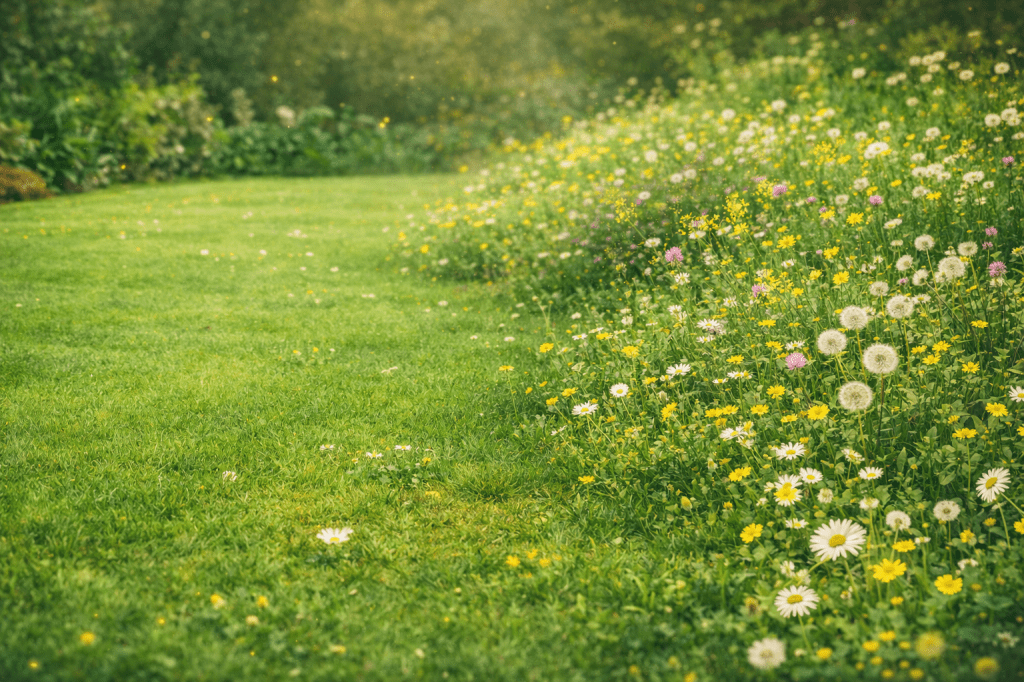
Weeds are flowers too, once you get to know them.
A A Milne
A day after the lockdown ended, I sat on my balcony, watching the garden below. For months, no one had touched it. Those plants had been my quiet companions during the long quarantine days—soothing, steady, alive.
That morning, I noticed people pulling them out.
From above, I watched as the lush green patch slowly turned into bare brown earth. Plants with tiny flowers and vibrant leaves were uprooted and tossed into a garbage truck. They lay there, lifeless—discarded.
I couldn’t understand why.
The next day, the reason appeared. Gardeners arrived, unloading tiles for a new lawn. That’s when it struck me—the plants I had admired were removed because they were considered weeds.
But how do we decide what a weed is?
Those little plants had a meaningful existence. They supported insects and worms. They added beauty with their green leaves and delicate flowers. They thrived without attention, without care—living on rainwater alone. They quietly decorated the land just by being there.
Yet, when the decision was made to create a manicured lawn—one that would need constant watering, trimming, and maintenance—these plants had to make way. They lost their place and their life, simply because someone else perceived them as weeds.
There’s a quote that says, “Weeds are flowers too, once you get to know them.”
It reminds us how much our perspective shapes what we value.
Grass growing in a paddy field is a weed. Rice growing in a flowerpot would be pulled out. Anything that exists where we don’t want it, at a time we don’t want it, gets labeled—and removed. A weed, then, is less about nature and more about perception.
Later that evening, I returned to the balcony with a cup of coffee. The lawn tiles were neatly laid, sprinkled with water to help them grow faster, greener. In a few days, I knew I would be admiring a perfectly manicured lawn.
This is the human way.
We interfere with nature. We remove what grows naturally and plant what we prefer. We cut down trees and then campaign to plant more. We kill animals for fun, food, or fashion—and later create slogans to save them. We pollute the planet and then fight to reduce the damage.
At the end of the day, we are human.
Not sure whether we can change that. But can we pause, reflect, and look a little deeper before we decide what deserves to stay or go?
—Anitha KC
 Resonance of Life
Amazing Perspective
LikeLiked by 1 person
Thoughtful blog Depiction of subject is clear.keep contributing.
LikeLiked by 1 person